


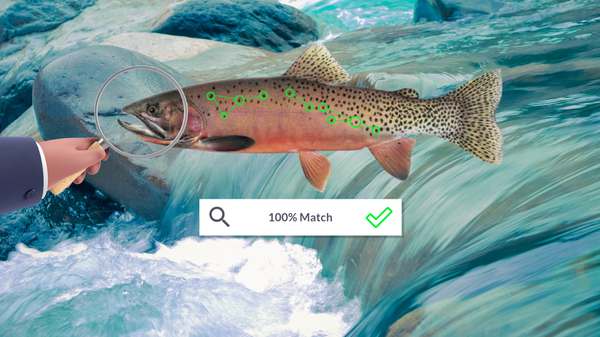
Trout Identification
Non-invasive technology for monitoring trout populations using computer vision to accurately identify individual fish.
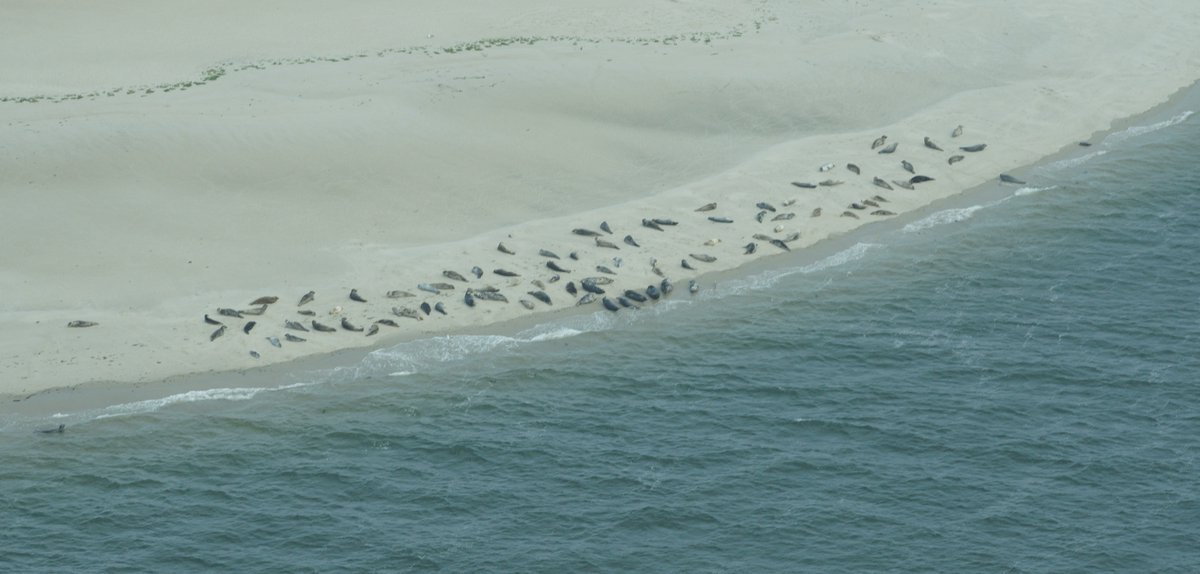


Counting, classifying and recognising individual seals from aerial surveys of the Wadden Sea.
The Wadden Sea, a UNESCO World Heritage Site spanning the Dutch, German and Danish coasts, is one of Europe’s most important nurseries for grey seals and harbour seals. To track the health of those colonies, researchers at Wageningen Marine Research photograph them from light aircraft several times a year, building a record of population size, age structure and breeding success.
But turning those photos into numbers has meant hundreds of hours of painstaking work: counting and classifying every seal by hand. Together with Wageningen Marine Research and Lumax AI, we built an AI system that does it automatically: it detects, counts and classifies every seal in an aerial image, and even recognises individuals by their natural markings, freeing researchers to spend their time on the science.
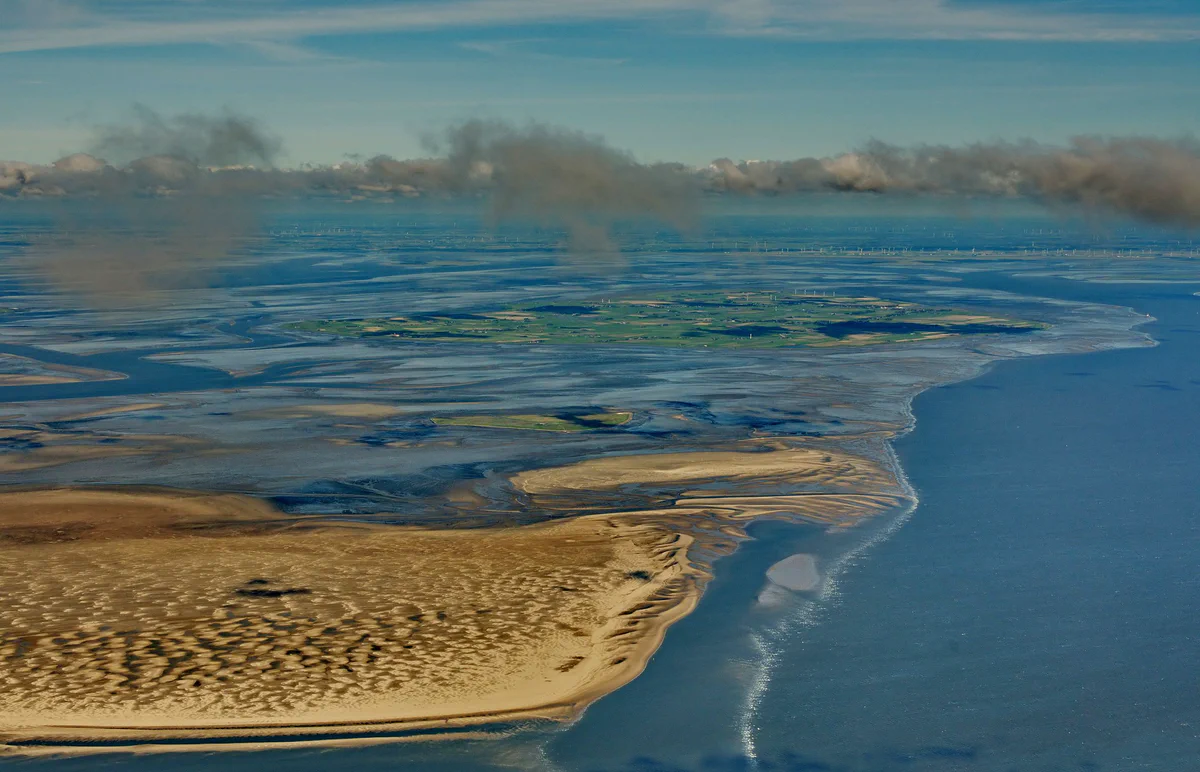
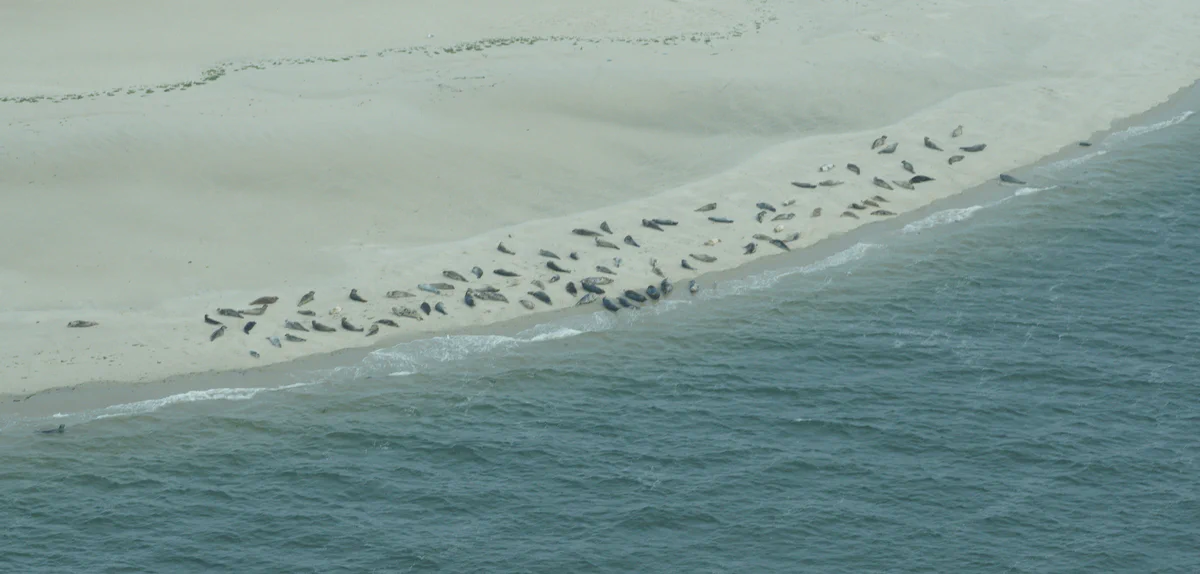

From a survey flight to a validated count, the system runs in four steps:
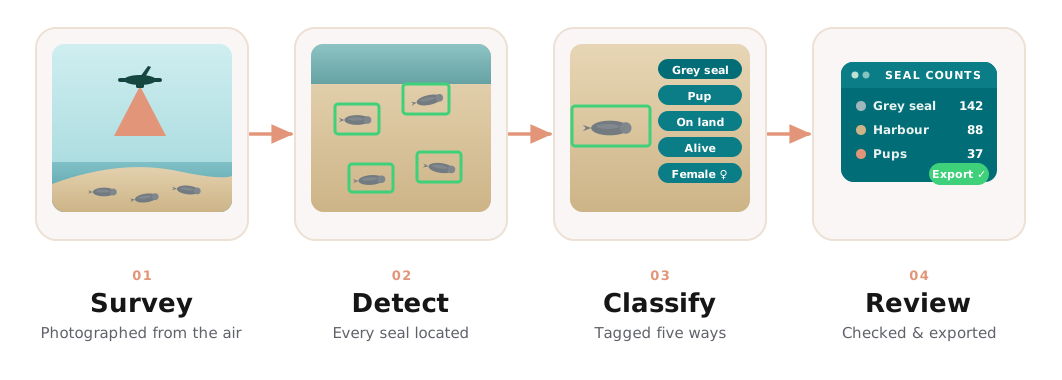 Aircraft photograph the colony; a model finds every seal, classifies each one
five ways, and the counts are reviewed and exported in a web app.
Aircraft photograph the colony; a model finds every seal, classifies each one
five ways, and the counts are reviewed and exported in a web app.
Seals sit near the top of the Wadden Sea food web, which makes them a sensitive barometer for the health of the whole ecosystem.
As top predators they help keep fish populations and the wider marine food web in balance.
Their numbers rise and fall with prey availability and water quality, so population trends reveal the state of the whole ecosystem.
Iconic animals of this World Heritage Site, seals support eco-tourism, and long-term monitoring tracks how climate change is reshaping coastal life.
Doing this well, by hand, is genuinely hard. Tap each challenge to see why.
Counting and classifying thousands of seals across aerial photos takes hundreds of researcher-hours every survey season.
Each seal has to be recorded by species, life stage, position, vitality and sex, all at the same time.
Accurate pup counts and sex ratios during the breeding season are vital for population health, yet hard to get by hand.
Aerial photos vary in lighting, angle, resolution and seal density, demanding expert judgement for every call.
Understanding movement and site fidelity needs a way to recognise individual seals without tagging them.
Keeping counting standards stable across seasons and different observers is hard without automation.
Two AI systems work side by side, across both grey seals (Halichoerus grypus) and harbour seals (Phoca vitulina): one counts and classifies every seal in a photo, the other recognises individuals over time. Both feed a single web app where researchers check the AI’s work and export validated data.
The first system starts with a detector that finds every seal in an aerial photo, even animals that are partly submerged, overlapping, or caught in awkward light. It then classifies each one five different ways:
Grey or harbour seal, told apart by size, head shape and coat. Grey seals are larger with longer snouts; harbour seals are rounder and spotted.
Adult or pup. Pup counts during the breeding season drive birth-rate and population-growth estimates.
Hauled out on land or swimming in the water, a window into habitat use and behaviour.
Alive or dead, so mortality can be monitored, which is especially important through the breeding season.
Male or female, where it can be told, feeding the sex ratios that inform breeding biology and population structure.
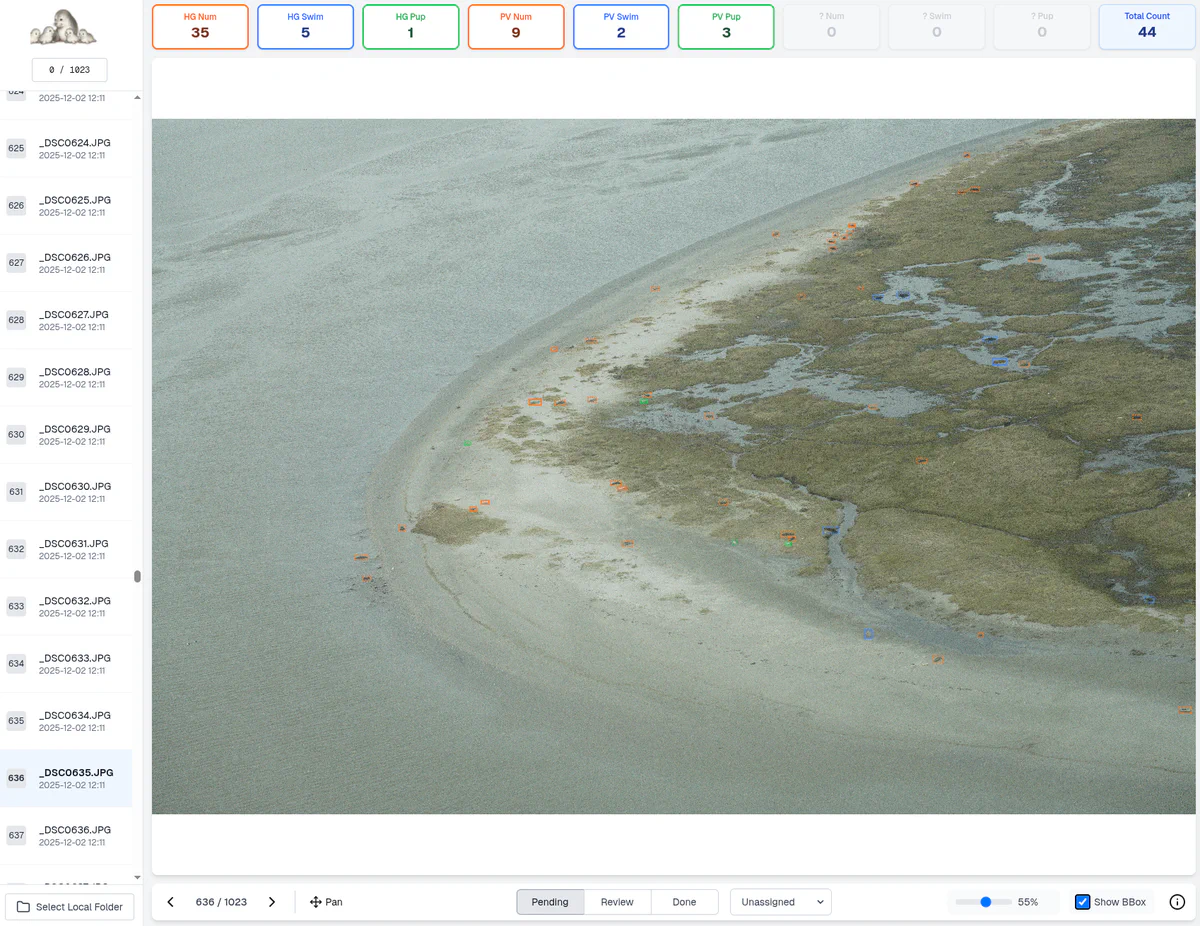
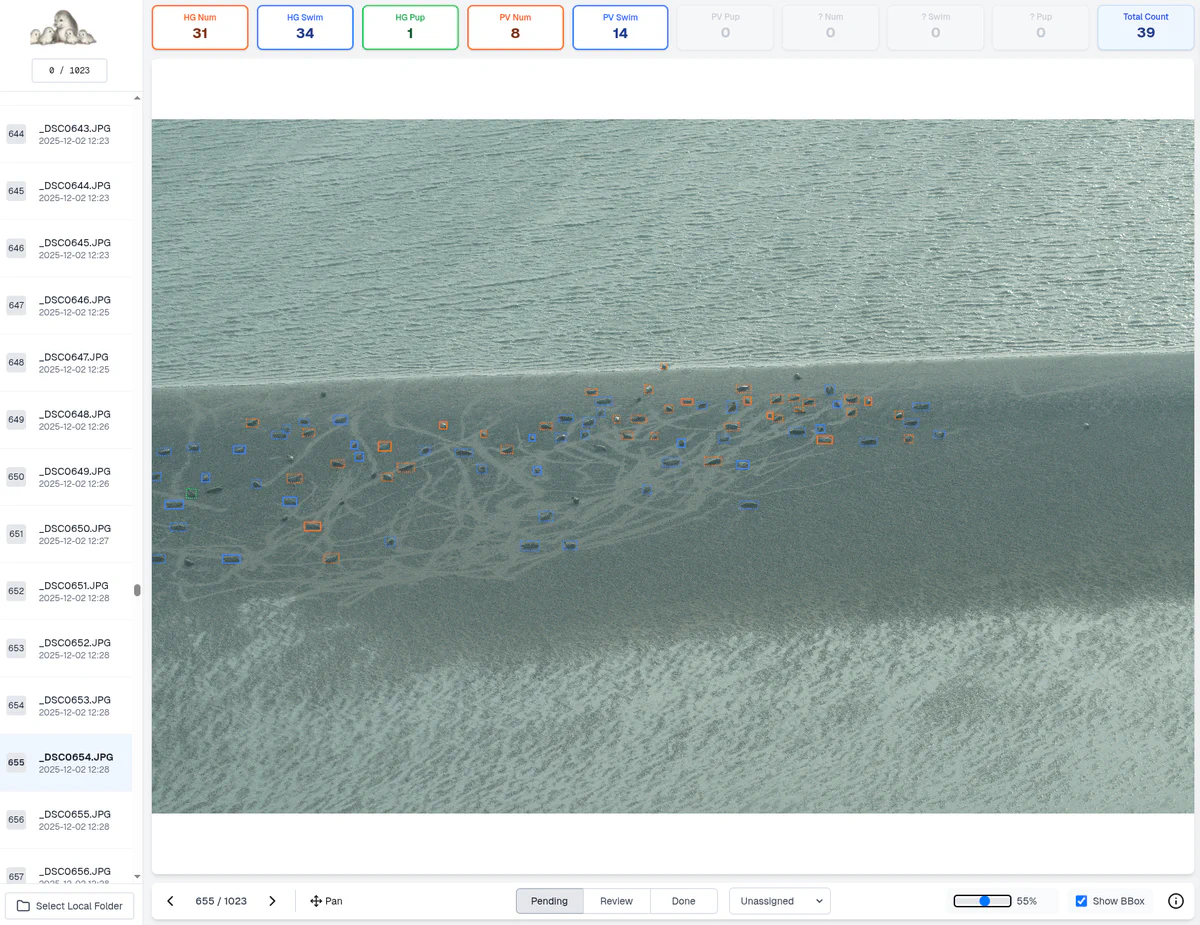
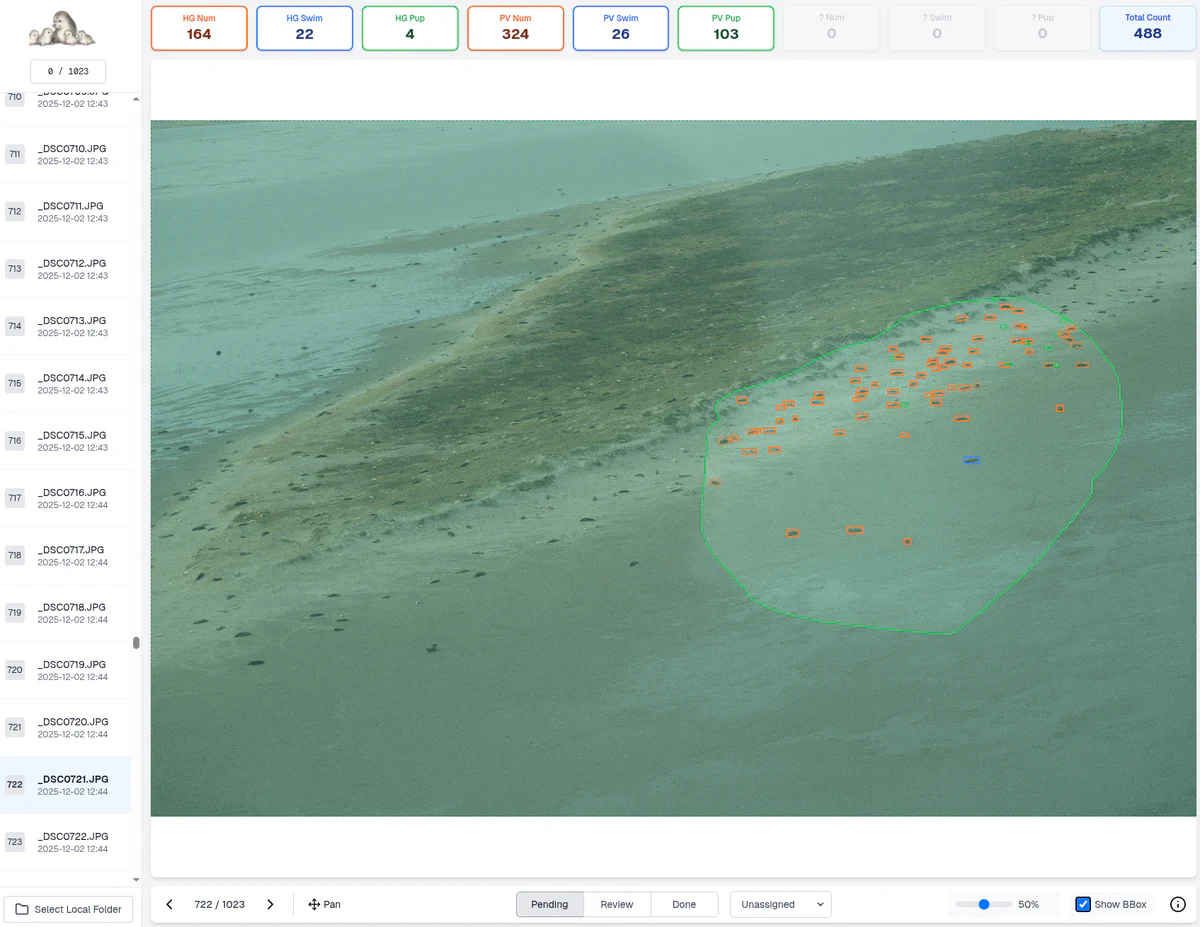
Every prediction lands in a web app that keeps researchers firmly in control: detected seals are drawn with colour-coded labels for all five attributes, uncertain cases are flagged for a closer look, any label can be fixed (or a missed seal added) in one click, and the validated counts export straight to a spreadsheet.
Tracking individual animals usually means tagging them: capture, handling, stress for the seal and logistics for the team. Our second system avoids all of that. Seals carry stable, distinctive markings (whisker spots, coat patterns, facial features) that stay with them for life, so the AI can recognise an individual from a photo alone, the way facial recognition works for people.
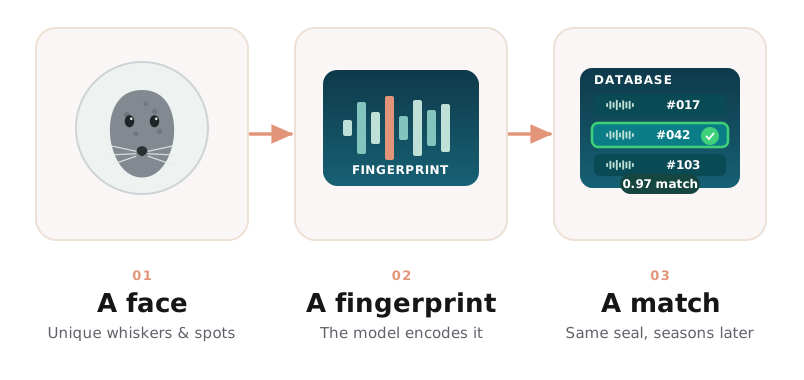 The model turns each seal’s face into a compact “fingerprint”, then compares it
against a database of known individuals to find the best match.
The model turns each seal’s face into a compact “fingerprint”, then compares it
against a database of known individuals to find the best match.
When a new photo comes in, the model condenses the seal’s face into that fingerprint and compares it with every seal already on file, returning the closest matches for a researcher to confirm, or registering a brand-new individual. The matches below were all made this way, from natural markings alone:
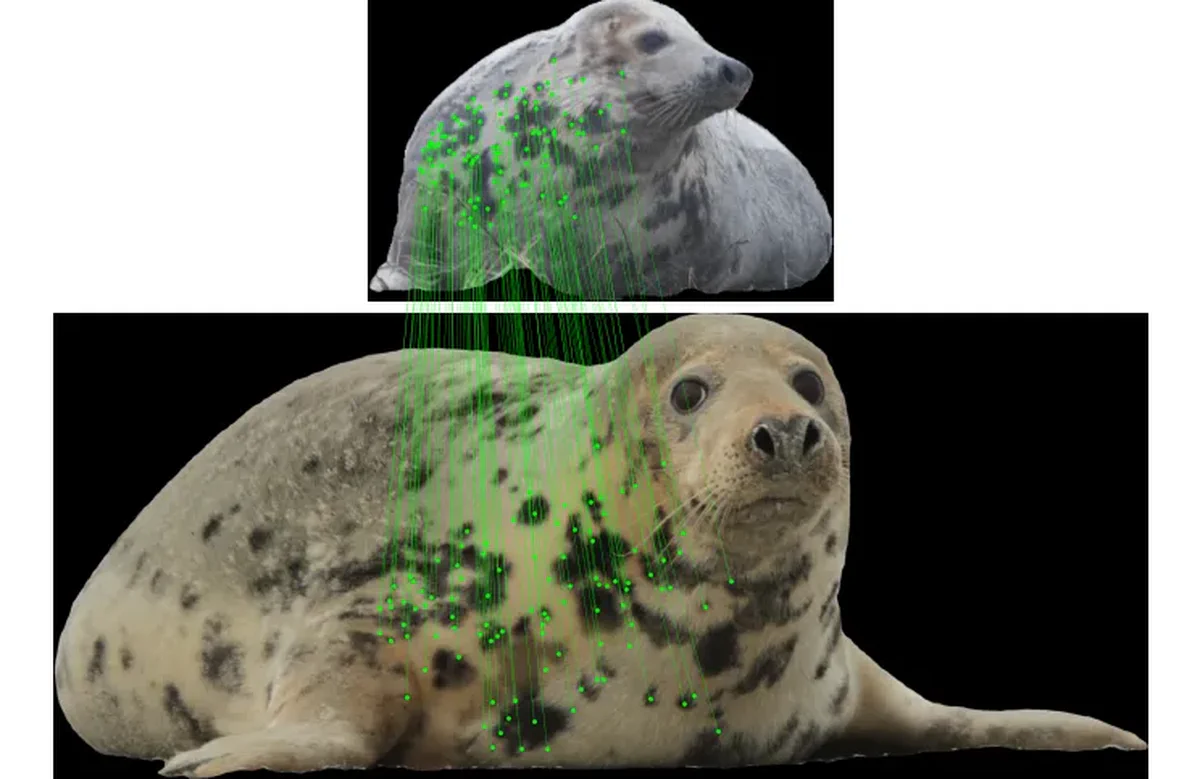
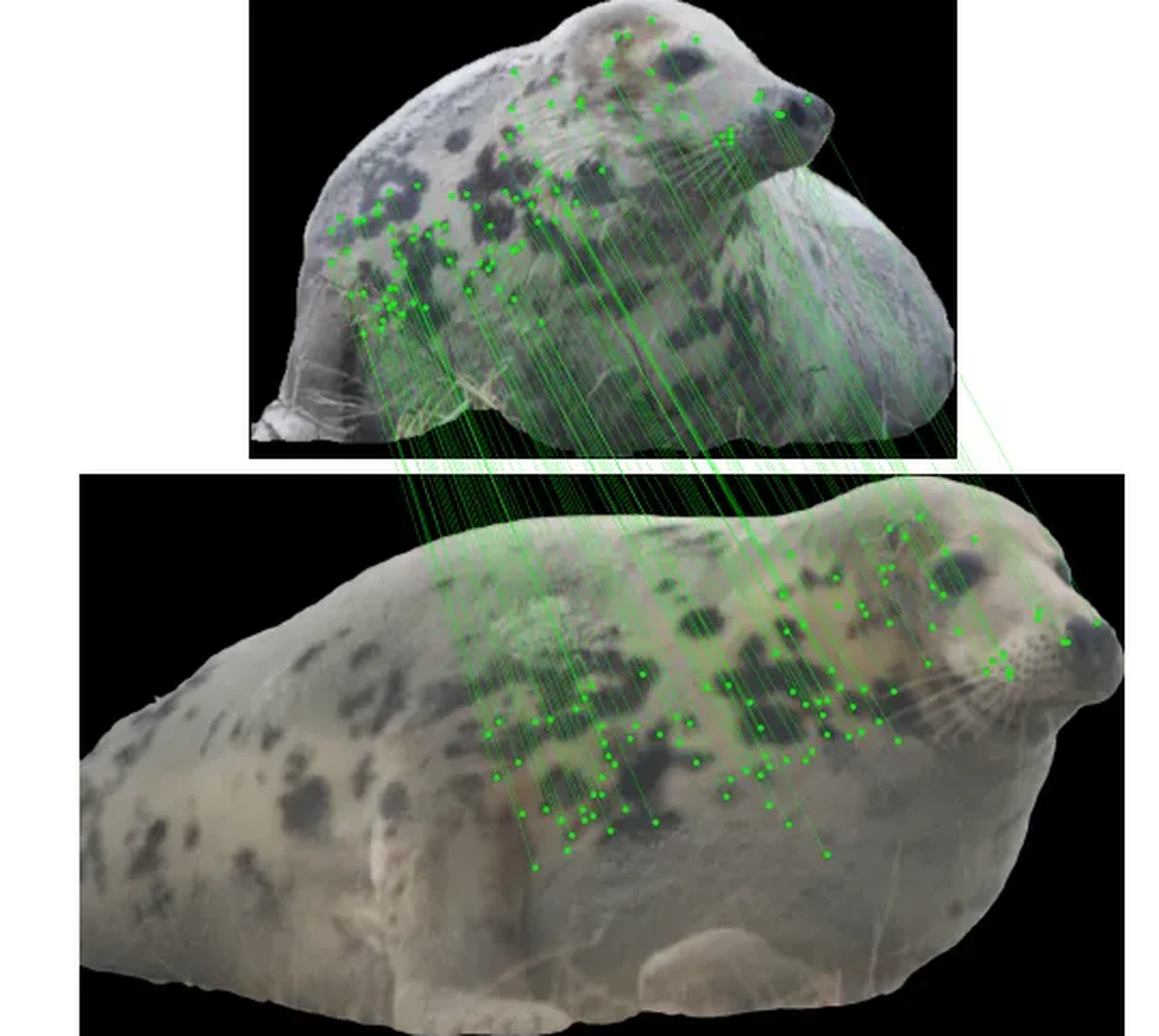
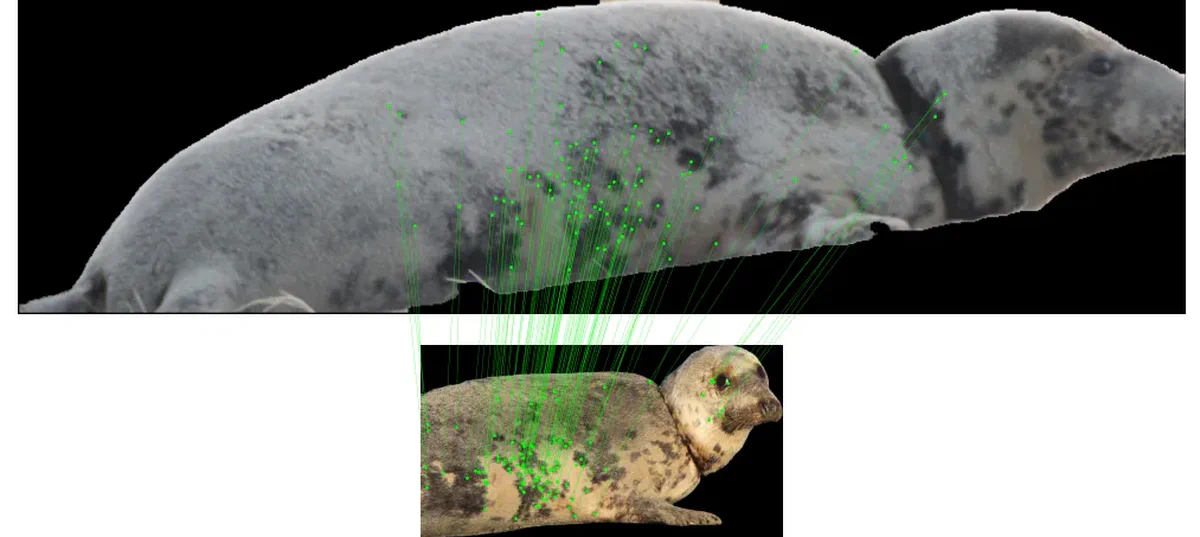
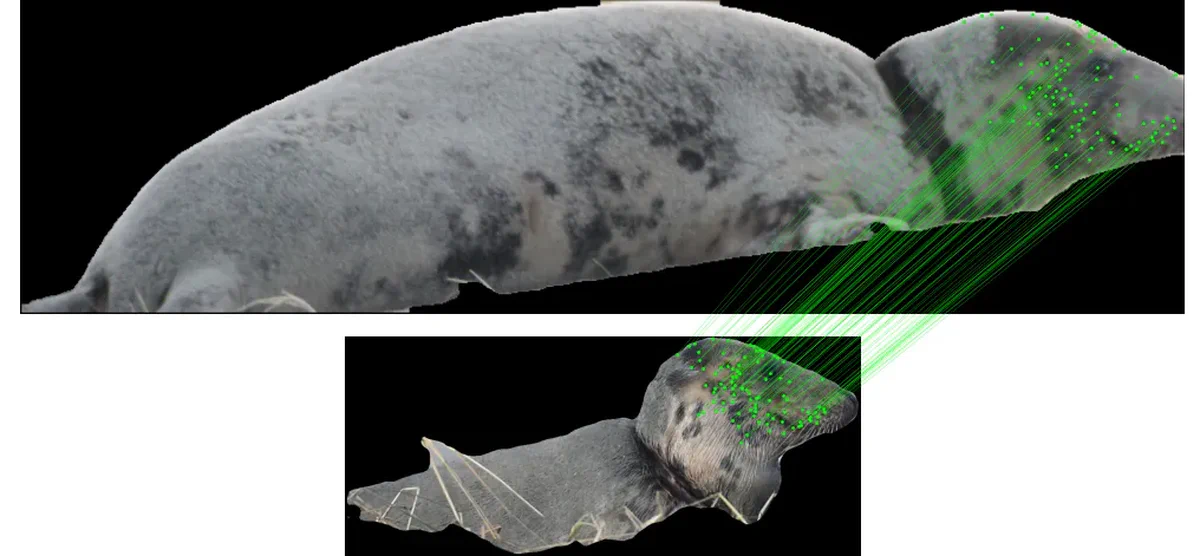
Recognising individuals over time turns a population count into a living record:
Which seals return to the same haul-out year after year, and how individuals move across the Wadden Sea between seasons.
Re-sightings across years yield survival rates, and following individual females reveals their pupping success over time.
Immigration, emigration and social structure within breeding colonies come into focus once individuals can be told apart.
The system has reshaped the work at Wageningen Marine Research. Analysis that once took hundreds of hours now takes a fraction of the time, and the counts are more consistent from one survey year to the next. Researchers can focus on biology and conservation strategy instead of data entry, and the re-identification system opens an entirely new, individual-level view of seal life that simply wasn’t possible before. The same framework can extend to other colonies, regions, or marine-mammal species.
See the model in action right in your browser. Try it on the built-in examples or your own data. No install, no setup.
Open the demoWe build conservation technology with partners in the field. Tell us what you're monitoring and we'll tell you what's possible.


Non-invasive technology for monitoring trout populations using computer vision to accurately identify individual fish.
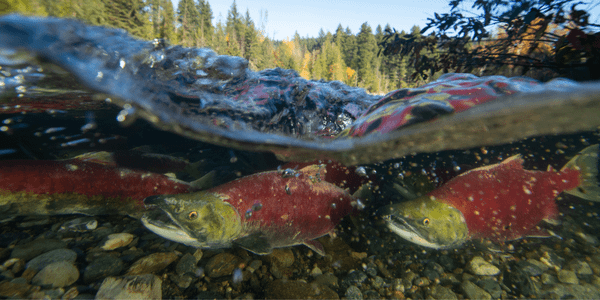
The project monitors wild salmon migration to ensure the number passing through meets state regulations, addressing threats from human activities like fisheries and dams.
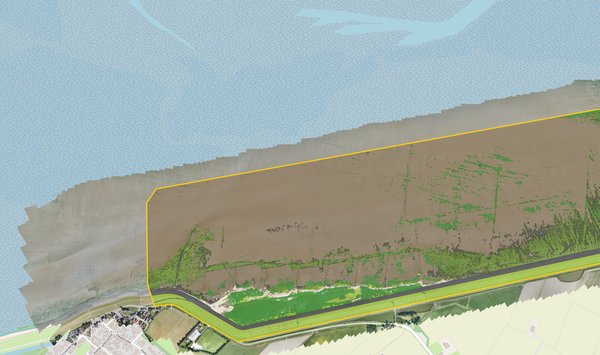
Drone-based monitoring of coastal erosion, sedimentation and land cover change on the Wadden Sea coast, served through an interactive web portal.
Re-identifying individual seals by their whisker and face patterns, non-invasively and across seasons.
Reading the spot patterns on trout to identify individual fish, a non-invasive way to monitor populations.
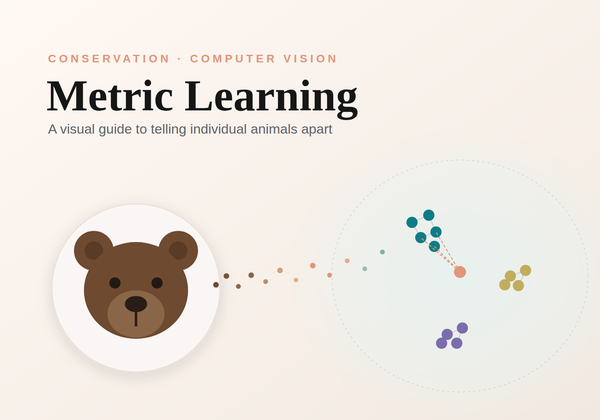
An intuition-first, visual guide to metric learning and how machines learn to tell individual animals apart for conservation re-identification.
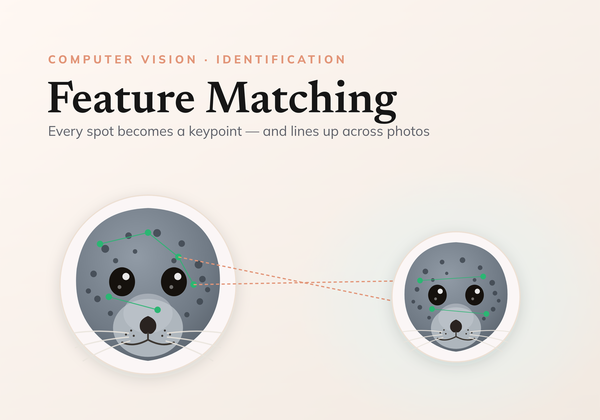
A comprehensive examination of using local feature matching for individual identification.
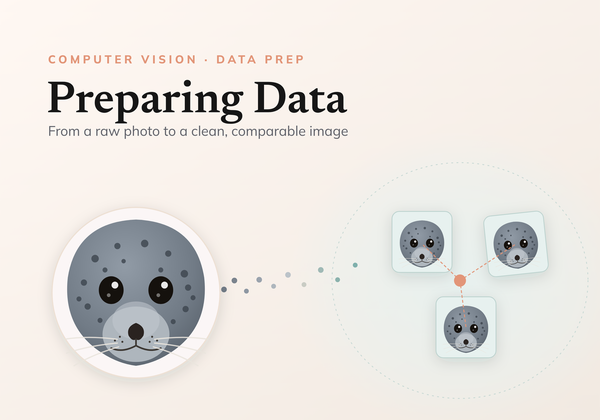
An in-depth look at the common preprocessing stages required to perform identification using computer vision.