A paper is not a tool a ranger can run
Conservation teams collect more data than they can ever look at: years of audio, millions of camera-trap photos, endless hours of underwater video. Research labs publish methods that could help, but they rarely leave the lab. We're a small team of engineers and ecologists who carry them the rest of the way.
How We Work
Every project follows the same path, from what the research makes possible to what runs in the field every day.
Start from the field problem
We sit down with the people collecting the data: what they record, where, and what decision it should feed.
Build on the best research
We start from published methods and models, adapt them to your species, sites and sensors, or train new ones on your data.
Deploy where the data is
A camera on a riverbank, a server in a ranger station, or the cloud: systems built for the power and connectivity you actually have.
Keep it running
Monitoring, retraining and support season after season, so the system still works when conditions change.
From Paper to Field
Three projects, three places where published research became something people rely on every day.
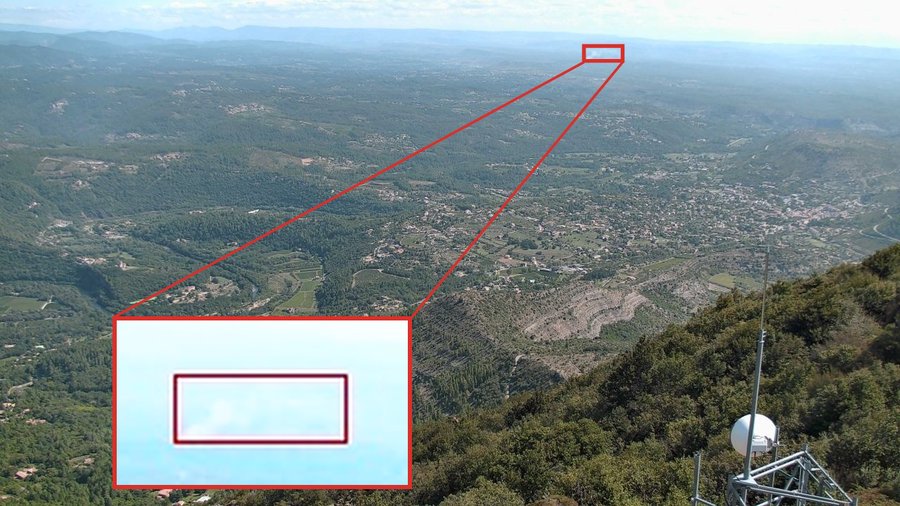
We surveyed the literature, raced 28 published methods head to head on a shared leaderboard, and shipped the winner.
Watching the forest 24/7 from 50+ camera stations: 500+ wildfires detected in real time, with 4× fewer false alarms and smoke spotted up to 35 km away.
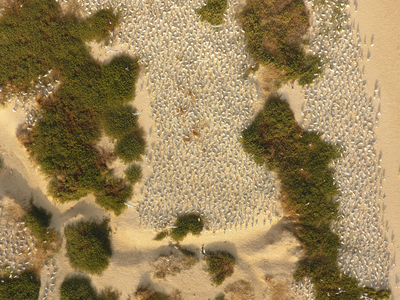
Every bird in the colony, from the sky
AI-BIRD surveys 10 seabird species, alive or dead, to track avian influenza.
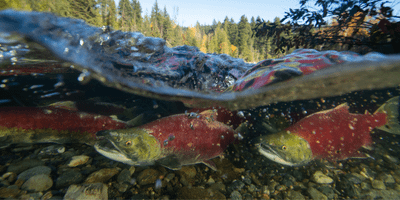
Counting every salmon, every river
SalmonVision counts migrating salmon in real time at 34 sites.
Explore all 15 projects on our projects page, or browse the tools behind them.
The Team
Ecologists and engineers in one small team, so the research and the field problem are always in the same room.
Arthur Caillau
Bridging conservation research and field use, turning promising methods into tools conservationists rely on.
Jeremy Vuillermet
Puts conservation technology into the hands of field researchers, with interfaces that make complex tools simple.
Eelke Folmer
Bridges ecology and technology through geospatial analytics, drone imagery and photogrammetry.
Thor Veen
Evolutionary biologist turned conservation technologist, building wildlife monitoring with computer vision.
The Journey
Funded and shipped: AI-BIRD, built with Lumax AI and Sovon, surveys seabird colonies from drone flights to track avian influenza. AI-BIRD ›
Drone monitoring of erosion and land cover on the Wadden Sea for Rijkswaterstaat. Project ›
28 research papers raced head to head became Pyronear's production smoke verifier, with 4× fewer false alarms. Project ›
Sonar counts smolt runs no camera could see. Project ›
BioWatch turns camera-trap archives into maps and insights.
Seal surveys take off over the Wadden Sea.
Snow leopard monitoring begins in the mountains of Central Asia.
Show 2024Hide 2024
Coral reef health monitoring.
Forest elephant acoustics with Cornell.
Bear identification.
SalmonVision starts counting fish on British Columbia rivers.

Early smoke detection
We trained their detection models and built the MLOps pipeline, then raced 28 published methods into a smoke verifier with 4× fewer false alarms.

Knowing one bear from another
With the BearID Project, we built facial recognition that tells individual brown bears apart from photos, for population monitoring without tags or tranquilizers.

Counting salmon in real time
Together we built SalmonVision, which counts and classifies migrating salmon in real time at 34 sites.

Listening for forest elephants
With their Elephant Listening Project, we built tooling that scans terabytes of Congo-basin rainforest audio for elephant rumbles and gunshots.

Seabird surveys from the sky
With Sovon and Lumax AI we built AI-BIRD, which turns drone flights over seabird colonies into surveys of 10 species, alive or dead.

Scaling conservation operations
We joined its engineering team at Ai2 to scale the backend behind real-time conservation at 900+ protected areas.

Keeping bears away from farms
Low-power technology that detects bears and deters them from Romanian farms, in Europe's largest forested national park project.
Have a conservation challenge?
Tell us about your data and your field problem, and we'll give you an honest read on what's possible and what it would take.
Funding conservation? Support our work