


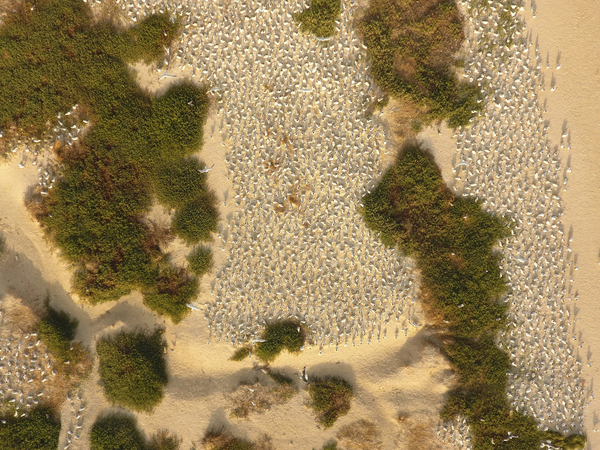
Bird Flu Monitoring
Utilize drones for precise monitoring of breeding seabird colonies by detection of live and dead adults and chicks to determine survival and reproduction and asses the impact of avian influenza.
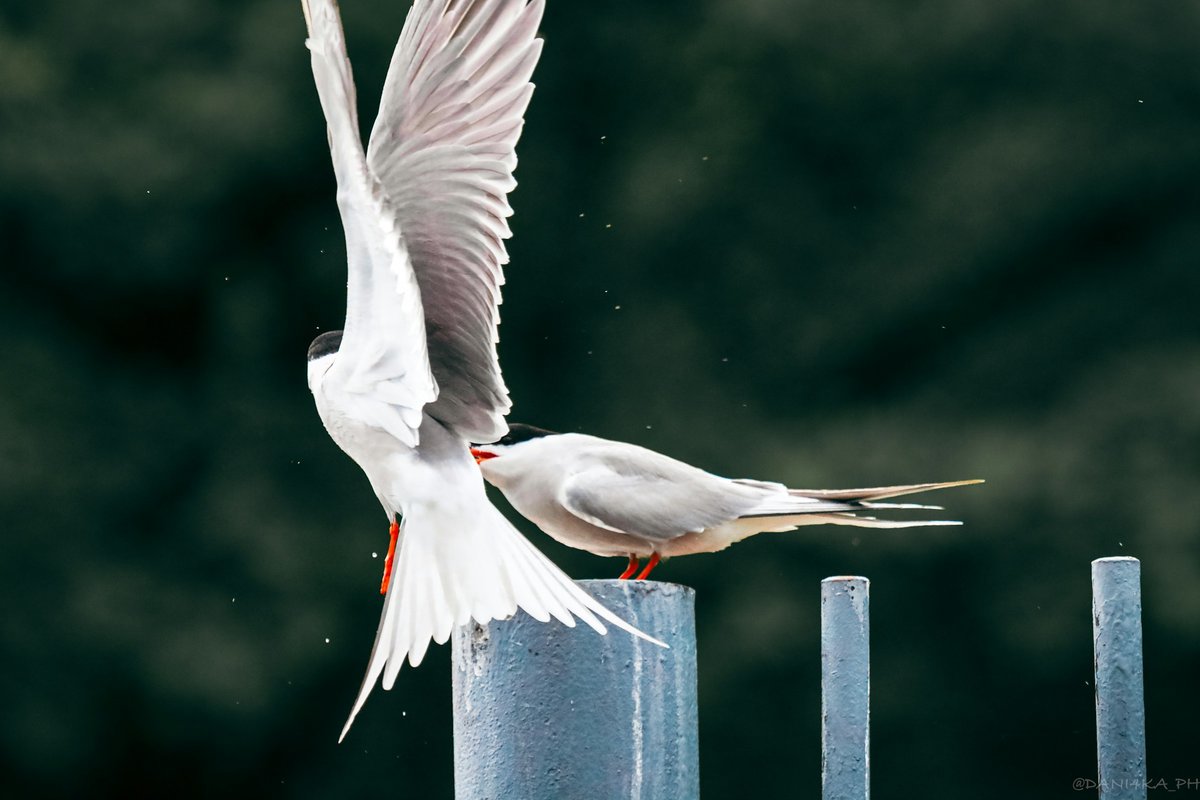
Nearly 95% of seabirds breed in colonies,1 packing thousands of nests onto a beach, a dune or an island. Along the Dutch coast, the Wadden Sea is a stopover for 10 to 12 million migrating birds every year.3
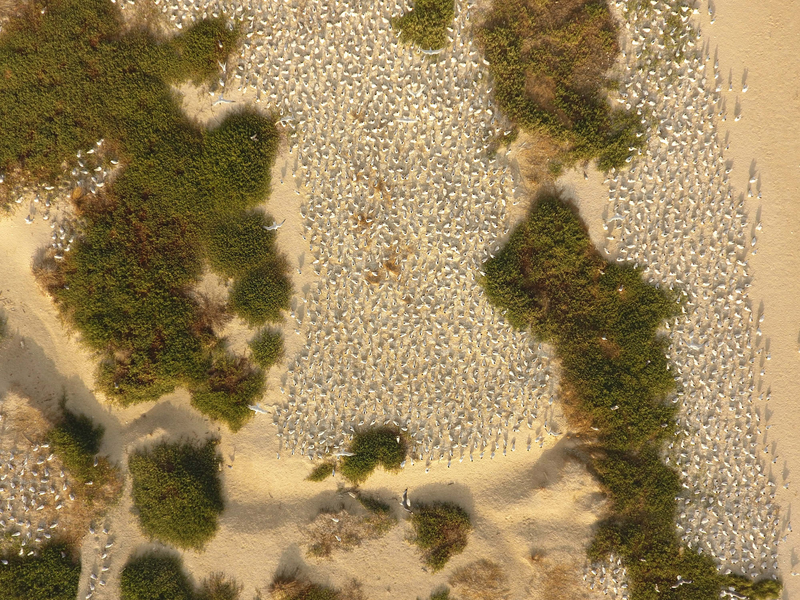
Colonies are also where disease spreads fastest. In the 2022 breeding season, highly pathogenic avian influenza H5N1 swept through Sandwich tern colonies in the Netherlands: 8,001 adults were found dead in the colonies, and another 1,600 outside them, out of 18,151 breeding pairs.2
Walking into a colony to count the dead disturbs nesting birds and spreads the risk. With AI-BIRD, a drone flies over instead, and our models find every bird, identify its species, sex and behaviour, and check whether it is alive, turning a flight into a survey.4 Read more about the bird flu monitoring project.
Utilize drones for precise monitoring of breeding seabird colonies by detection of live and dead adults and chicks to determine survival and reproduction and asses the impact of avian influenza.

Automated bird surveys from drone imagery. AI finds every bird, identifies its species, sex and behaviour, checks whether it is alive, and turns it all into georeferenced maps and reports.
Every project here was built hand in hand with conservation partners, and much of the code is open source. If our work fits a challenge you're facing, or you'd like to build something together, we'd love to hear from you.